
Located in the mountainous northwestern region of Puerto Rico, San Sebastián is a charming municipality known for its rich history, agricultural traditions, beautiful countryside, and strong connection to Puerto Rican culture. Often called San Sebastián del Pepino, the town offers visitors a glimpse into the island’s rural heritage, from its historic town center and traditional architecture to its celebrated festivals and scenic natural attractions.
Founding and Early History
San Sebastián was officially founded on September 12, 1752. Its early development was closely connected to agriculture, livestock raising, and the growth of small rural settlements in the western part of Puerto Rico. The area became known as El Pepino, a name traditionally associated with the distinctive shape of the local landscape. Over time, the settlement grew into an important community serving surrounding farms and rural neighborhoods.
The municipality’s founding is commonly associated with Cristóbal González de la Cruz, who helped establish the settlement. Like many Puerto Rican towns founded during the Spanish colonial period, San Sebastián developed around its central plaza and church, which became important gathering places for religious celebrations, community events, and public activities.
During its early years, the local economy depended heavily on agriculture. Coffee, tobacco, and other crops supported generations of residents, while cattle raising and small businesses contributed to the town’s development. Although modern industries and services have expanded the economy, agriculture remains an important part of San Sebastián’s identity.
[caption id="attachment_25431" align="alignnone" width="500"]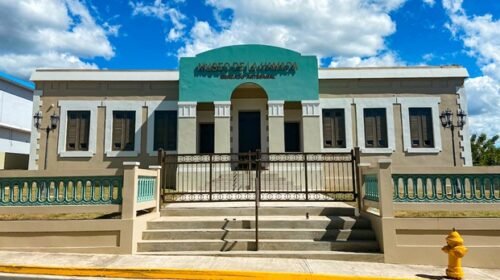 Museo de la Hamaca[/caption]
Town Colors and Local Identity
San Sebastián’s municipal identity is represented by its official flag and coat of arms, which reflect the town’s historical and cultural heritage. San Sebastián’s official flag uses red, green, and white, not yellow. Red represents the patron saint and the events of the 1868 Grito de Lares, green symbolizes the surrounding mountains, and the white wavy stripe represents the Culebrinas River. The municipality was founded in 1752, with Captain Cristóbal González de la Cruz recognized as its founder.
Residents are also proud of the town’s nickname, El Pepino, and its reputation for hospitality, music, traditional celebrations, and close-knit communities. These characteristics make San Sebastián an appealing destination for travelers interested in experiencing Puerto Rico beyond its major cities and resort areas.
Parroquia San Sebastián Mártir
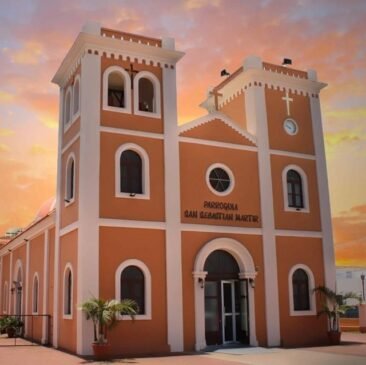 One of the most important landmarks in the town center is Parroquia San Sebastián Mártir, the local Catholic church dedicated to Saint Sebastian, a Christian martyr traditionally honored for his faith and courage.
The parish reflects the central role that Catholicism has played in the history of Puerto Rican communities. Like many historic churches across the island, it serves as a place of worship and a gathering point for religious celebrations, including activities honoring the municipality’s patron saint.
The church’s location near the town center makes it a natural stop for visitors exploring the surrounding plaza and historic streets. Its religious significance connects the present-day community with generations of residents who gathered here for worship, baptisms, weddings, feast days, and other important occasions.
The patron saint of San Sebastián is San Sebastián Mártir, whose feast day is traditionally observed on January 20. Religious observances and local festivities help maintain the town’s cultural traditions and bring residents together.
Sites of Interest in San Sebastián
San Sebastián offers several attractions for visitors interested in history, nature, and local culture.
Plaza de Recreo and the Town Center: The central plaza is a good place to begin exploring San Sebastián. Surrounded by local businesses and civic landmarks, it offers an opportunity to experience everyday town life and appreciate the municipality’s traditional layout.
Gozalandia Waterfalls: Among the region’s best-known natural attractions, Gozalandia features waterfalls, natural pools, and lush tropical vegetation. The site attracts visitors who enjoy swimming, photography, and exploring Puerto Rico’s mountainous interior. Visitors should follow posted safety instructions, particularly after heavy rainfall.
Hacienda La Fe and Rural Landscapes: San Sebastián’s agricultural surroundings reflect the municipality’s historic relationship with farming and the countryside. Exploring the rural roads and nearby communities provides a closer look at the island’s western mountain region.
Local Festivals and Cultural Events: The town is especially known for its traditional celebrations and lively community gatherings. Music, food, crafts, and folkloric performances provide opportunities to experience Puerto Rican customs firsthand.
A Destination Worth Discovering
San Sebastián combines historical significance, religious tradition, agricultural heritage, and natural beauty. From the welcoming town plaza and Parroquia San Sebastián Mártir to the spectacular waterfalls and surrounding green hills, the municipality offers a rewarding experience for residents and visitors alike.
Whether exploring its colonial-era roots, attending a local festival, or spending a day enjoying the countryside, San Sebastián reveals an authentic side of Puerto Rico where community traditions and natural landscapes remain an important part of everyday life.


No comments:
Post a Comment