Wednesday, July 31, 2024

Paseo Boricua: A Cultural and Historical Hub in Chicago

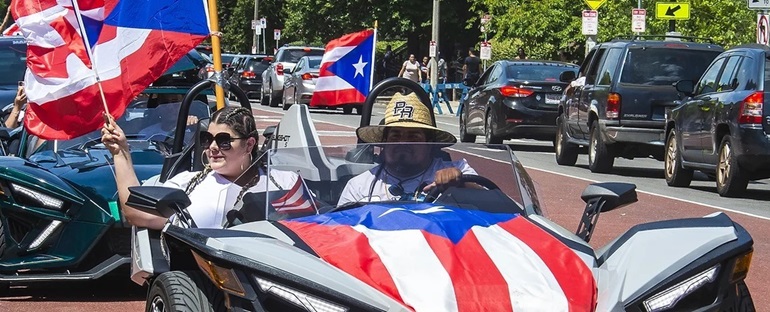
 paseo boricua puerto rican flags

Paseo Boricua, located in the Humboldt Park neighborhood of Chicago, is a vibrant cultural corridor that serves as a testament to the rich heritage and enduring spirit of the Puerto Rican community in the city. Spanning a half-mile stretch of Division Street between Western Avenue and California Avenue, this area is not only a commercial and social hub but also a symbolic heart of Puerto Rican identity in Chicago.

Background and History

The story of Paseo Boricua is deeply intertwined with the broader narrative of Puerto Rican migration to the United States. Following World War II, many Puerto Ricans moved to the mainland in search of better economic opportunities. Chicago emerged as a prominent destination, with the Puerto Rican population in the city growing significantly during the 1950s and 1960s. Humboldt Park became a focal point for this burgeoning community, offering affordable housing and opportunities for cultural expression.

The establishment of Paseo Boricua in 1995 was a concerted effort to revitalize the neighborhood and formally recognize its cultural significance. Spearheaded by community leaders and organizations, this initiative aimed to combat the economic decline and social challenges that had plagued the area. The designation of this stretch of Division Street as Paseo Boricua was a declaration of pride and resilience, transforming it into a space where Puerto Rican culture could flourish and be celebrated.

The Impact of Puerto Ricans in the Area

Puerto Ricans have made profound contributions to the Humboldt Park neighborhood, shaping its identity and fostering a sense of community. One of the most visible impacts is the proliferation of businesses that reflect Puerto Rican culture, from restaurants serving traditional dishes like mofongo and lechón to shops selling handcrafted goods and artwork. These establishments not only provide economic opportunities but also preserve and promote Puerto Rican heritage.

Cultural institutions and events further underscore the community's influence. The Puerto Rican Cultural Center, founded in the early 1970s, offers educational programs, health services, and advocacy, addressing the needs of residents while celebrating Puerto Rican history and culture. Annual events such as the Puerto Rican People's Parade and the Fiestas Patronales de Puerto Rico attract thousands of visitors, showcasing the vibrant traditions of music, dance, and cuisine.

Moreover, the community has been active in addressing social issues, from housing rights to education reform. Initiatives such as affordable housing projects and the establishment of charter schools have been driven by a desire to improve the quality of life for residents while preserving the neighborhood's cultural fabric. This activism reflects a deep commitment to social justice and community empowerment, hallmarks of the Puerto Rican experience in Chicago.

The Symbolic Metal Flags

Perhaps the most iconic landmarks of Paseo Boricua are the two large steel Puerto Rican flags that stand at the gateways of the corridor. Installed in 1995, these flags are the first and largest of their kind in the world, each weighing 45 tons and measuring 59 feet in height and 55 feet in width. Designed by local artist Antonio Martorell, they serve as both literal and symbolic gateways to the cultural heart of the Puerto Rican community.

The flags are more than mere markers; they embody the pride, resilience, and aspirations of the Puerto Rican people in Chicago. They stand as monuments to the struggles and triumphs of the community, symbolizing a territory that, while geographically distant from Puerto Rico, is deeply connected through shared heritage and collective identity.

Conclusion

Paseo Boricua is much more than a commercial strip; it is a living, breathing embodiment of Puerto Rican culture and community in Chicago. From its origins as a haven for migrants seeking better opportunities to its current status as a vibrant cultural corridor, it reflects the enduring legacy and contributions of Puerto Ricans to the city. The impact of the community is visible in the thriving businesses, cultural institutions, and social activism that define the area. The majestic metal flags at its entrances stand as powerful symbols of identity and pride, welcoming all who enter with the promise of rich cultural experiences and a deep sense of belonging.

In essence, Paseo Boricua is a testament to the power of community and the importance of preserving cultural heritage in the face of change and adversity. It is a celebration of Puerto Rican identity and a beacon of resilience, inviting future generations to continue the legacy and enrich the tapestry of Chicago's diverse cultural landscape.

Tuesday, July 30, 2024

Villas del Mar Hau


Situated on a stunning cove of the Caribbean Sea, these tropical villas are located near a serene beach area. Villas Del Mar Hau can be found in Jobos, a neighborhood in Isabela, ideally positioned in a rural setting and directly on the beach. The Paseo Lineal is a noteworthy destination if activities are planned, while those keen to appreciate the area’s natural splendor should visit Jobos Beach and Playa Montones. Scuba diving and snorkeling provide excellent opportunities to explore the nearby waters, or you can embark on an adventure with local hiking/biking trails and cave exploration.


Discover Unmatched Leisure and Comfort at Our Resort

Experience the ultimate in leisure and convenience at our resort, where each amenity is designed for your enjoyment and relaxation.

Celebrate a Stunning Oceanfront Wedding

Imagine your dream wedding or a grand celebration set against the backdrop of stunning ocean vistas and lush landscapes. Olas y Arena Restaurant offers the perfect setting for your unforgettable events. From intimate gatherings to lavish celebrations, our serene beachfront venue caters to your every need, ensuring each moment is cherished forever.


Contact Us:

Phone: 787-872-2045
Only WhatsApp: 787-908-2067
Email: villahau@gmail.com
Service Hours: 8:00 a.m. – 9:00 p.m.

Monday, July 29, 2024

A Day in the Crib


After a six year Off-Broadway run and a US and Puerto Rico Tour of his award-winning play, GROWING UP GONZALES, Felix Rojas tackles the topic of trust and infidelity in his new, wild comedy, A DAY IN THE CRIB. The story takes place during a ten-hour period on a Friday in June, in a Bronx three story walk up. John and Laurie, a struggling married couple, with a rambunctious sixteen-year-old daughter, are on a collision course with accountability. John strays a little too far with a gorgeous young Latina who's text messages land in the wrong hands. Laurie is forced to search deeper than she ever has to keep her pride, her sanity and her family intact. These, rich, diverse, irresistible and loveable characters will have your head spinning in this Tyler Perry meets Neil Simon comedy.
 
Taking on the lead role, LAURIE, we have Crystal Johnson. A native, Brooklyn, New Yorker, Crystal Johnson began her career at age seven, recording with The Institutional Children's Choir. At age 11, she landed the original lead role in the Gospel classic, Mama I Want to Sing and performed in a variety of stage productions including Porgy and Bess, starring Teresa Merritt. By age 19, Crystal was an established actress, performing on Broadway in The Gospel at Colonus, starring Morgan Freeman. As a solo recording artist, she has collaborated with, Usher, Angie Stone, Anthony Hamilton, Heavy D, Dr. Dre and Mary J Blige among others. The Crib welcomes Crystal Johnson with open arms.
 
Playing the lost and unfaithful husband, Tony, is Rahul Gajasamharamoorthy. Rahul is a veteran of film, stage and podcasts. Rahul's stage credits include, DINNER DETECTIVE, SLUETH and NAKED THEATER, his film credits include, 1000 MILES, THE GENE POOL and A LOOK IN THE REARVIEW MIRROR. Rahul is also a stand-up comic and media producer. Rahul brings his unique brand of energy to A DAY IN THE CRIB.
 
Talk show host, actress, producer and creator, Rhina Valentin will be playing the role of the nosy neighbor, Carmen. Rhina has performed with some of NYC's finest, she is CEO of La Reina Del Barrio, Inc, a full service, multi-media television production company. Rhina produced and created, THE COLORS OF RHINA, a variety talk show designed to inspire, educate and celebrate the diverse, multi-cultural heart of New York. Rhina has always had her finger on the pulse of the melting pot that is NYC. Where there is a cultural event Rhina is usually behind it, using both hands to lift it up or in front, using her voice to share its message. Welcome to THE CRIB Rhina Valentin.
 
Rounding out the cast are, Maria Belisario as Holly, From the Netflix special EL GANADOR, Avery Rodriguez as Edwin, Vincent Bagnall as Seth Ramos, the gay Cuban Jew from Laurie's past, Stand-up comedian and producer Rob Torres as Officer Hector and Jessie Cotto as Kiki.
 
A DAY IN THE CRIB
at 
THE SONNET THEATER /THE PRODUCERS CLUB
358 W. 44th Street, NY, NY
OPENS OCTOBER 3RD 2024
LIMITED ENGAGEMENT

The Puerto Rican Festival of Massachusetts


History: From a Festival to a Cultural & Community Building Organization

The Puerto Rican Festival of Massachusetts was born in 1967 out of Boston’s South End neighborhood. A small group of Puerto Rican pioneers, under the leadership of the late Jorge “Chico” Muñoz, became the first Festival Committee. The committee, along with the commitment of a countless number of community stakeholders, set out to create an event that would promote a sense of belonging and cultural affirmation for Puerto Ricans living across the Commonwealth. This first event took place in Blackstone Park, with approximately 2,500 in attendance. This launched the Puerto Rican Festival of Massachusetts.

The Festival

The annual Puerto Rican Festival is our flagship event, bringing together people from all cultures and walks of life to celebrate and join our community. This three-day event will be held at Franklin Park on July 27 and 28, 2024.

It will consist of live performances by local and international artists, kiosks selling typical Puerto Rican food, local arts and crafts, mechanical rides, and a variety of activities for the entire family. It offers the opportunity for business partners to interact with the Hispanic community, including a Health Expo. The festival culminates with the Puerto Rican Parade, where the community showcases its culture through fabulous floats, colorful dance troupes, singers, dancers, and appearances by distinguished honorees.

Our proven ability to attract 50,000+ participants during the three-day celebration, coupled with this year’s outstanding program of events, musical bands, artists, and sponsors, makes the Festival the perfect venue to market and outreach to the fastest-growing ethnic population in New England and the United States.


Parade Information
Información del desfile

Festival location: Franklin Park

The parade sign-ups are now Open All paid registrants will receive a confirmation by

July 13th, 2024.​

Please read Carefully as we have made many changes to our parade, it's very important to read before registering and submitting payment!​

These fees help us pay for Parade expenses & keep our events free to the public thank you. ​

Ubicación de Festival: Franklin Park

Los registros del desfile ya están abiertos, todos los solicitantes de registro pagados recibirán una confirmación antes del 13 de Julio de 2024.​

Estas tarifas nos ayudan a pagar los gastos del desfile y mantener nuestros eventos gratuitos para el público gracias.​

Por favor lee toda la información, cambiamos unos cuantos detalles de nuestra Parada, es muy importante leer antes de someter su pago.

Registration Deadline Closes on June 30, 2024

El plazo de inscripción cierra el 30 de Junio de 2024

For More Information visit the website: Puerto Rican Festival of Massachusetts

Follow on Facebook: Puerto Rican Festival of Massachusetts

Sunday, July 28, 2024

10 Reasons Why You Should Try Snorkeling At Least Once in a Lifetime

 snorkeling

Snorkeling is an incredible way to explore the underwater world and witness the beauty of marine life up close. Whether you're visiting the stunning landscapes of Nusa Penida and Nusa Lembongan or embarking on a drift diving adventure across different dive sites, particulary a Nusa Lembongan snorkeling experience will leave a lasting impression. From the safe and comfortable environment to the opportunity to encounter a diverse array of marine creatures, there are countless reasons to try snorkeling at least once in your lifetime.

Immerse yourself underwater and let the wonders of the aquatic realm captivate your senses. Start planning your next reason to try snorkeling and 10 reasons to try snorkeling adventure today and unlock a world of unforgettable experiences. 


1.Safe and Comfortable Experience

Snorkeling offers a safe and comfortable way to immerse yourself in the ocean's beauty. With the proper equipment and guidance from experienced instructors, you can explore the vibrant marine life without the need for specialized diving certifications. The shallow waters and easy-to-use snorkel gear make snorkeling an ideal activity for both beginners and seasoned adventurers alike.

  1. Explore Marine Life

One of the primary allures of snorkeling is the opportunity to witness the incredible diversity of marine life up close. From colorful coral reefs teeming with tropical fish to the chance to spot majestic sea turtles and other fascinating creatures, the underwater world is a realm of wonder waiting to be discovered. Whether you're visiting Nusa Penida, Nusa Lembongan, or any other snorkeling destination, the chance to observe these incredible living beings in their natural habitat is a truly unforgettable experience.

  1. Simple Equipment

In addition to the essential FMS (Fins, Mask, Snorkel) package, you have the option to incorporate additional snorkeling gear, like a top or a snorkeling shorty. These additions not only keep you warm but also offer protection from the cold and prevent direct contact with the seabed, and there are now full-face masks that make snorkeling even easier and more comfortable

  1. Snorkeling easy to learn

As you've now understood, snorkeling is an activity that's perfect for all swimmers and all budgets. Snorkeling can be done by everyone, including children aged 5 or 6 years. A short demonstration and a few minutes of practice are usually enough to get started. Additionally, swimming skills are not a necessity, especially if you are using a life vest. Snorkeling is an inclusive activity suitable for individuals of all swimming abilities and financial means.

  1. You can enjoy snorkeling as part of a day trip

Snorkeling stands out as an ideal aquatic activity for vacations due to its minimal equipment requirements and compact gear, unlike surfing or windsurfing. Whether you're traveling by car, train, or plane, snorkeling is easily accessible. Plus, it's a fantastic family activity that seamlessly integrates into your vacation plans.

  1. Snorkeling is a healthy pastime

Snorkeling offers numerous health benefits. It improves breathing function, cardiovascular health, joint flexibility, and overall fitness, all while being gentle on the body. Connecting with nature and physical activity can also uplift your spirits. Despite its leisurely reputation, snorkeling demands effort comparable to activities like jogging or cycling. Each fin kick burns calories, strengthens the heart and core muscles, tones the legs, and maintains fitness levels. It's a delightful way to exercise without breaking a sweat, even in the summer heat. Quite a remarkable workout, wouldn't you agree?

  1. Relaxation

You may not immediately associate snorkeling with relaxation, but that's only until you've tried it for yourself! Snorkeling offers a serene experience, unlike anything on land. There's no need for competition, no pressure to perform, just a departure from the stresses of daily life. It's your moment to unwind completely! Your only task is to explore and marvel at the underwater wonders that envelop you.

  1. Snorkeling is the gateway to scuba diving

Snorkeling teaches vital skills such as breathing through a snorkel, maintaining balance, and navigating with fins, all of which are fundamental to scuba diving. However, despite their similarities, they are distinct activities. Scuba diving requires proper introduction and training from a padi accredited dive center. Are you ready to dive into the depths and explore scuba diving?

  1.  You can take underwater pictures

What surpasses vacation photos? Underwater vacation photos! Capture your adventure using a disposable camera, cell phone with a waterproof case, GoPro, or enlist the help of a professional photographer.

  1. Guaranteed Enjoyment!

Snorkeling offers instant, risk-free fun for everyone, without the need for extensive training. From the moment you enter the water, the excitement begins! You don't have to dive deep to appreciate the underwater beauty start by exploring the surface.

If you have any more questions about snorkeling or need further information, feel free to reach out to us.

Saturday, July 27, 2024

Escabeche de Guineos | Puerto Rican Marinated Green Bananas


Escabeche de Guineos is a delicious and refreshing Puerto Rican side dish made with green bananas marinated in a tangy vinegar-based sauce. It's a perfect accompaniment to any meal, especially grilled meats or fish. Here's what you'll need:

Ingredients:

  • 6 green, unripe plantains (not bananas)
  • 1/2 cup extra virgin olive oil
  • 2 tablespoons white vinegar
  • 1 white onion, thinly sliced
  • 1/2 red bell pepper, thinly sliced (optional)
  • 1/2 green bell pepper, thinly sliced (optional)
  • 1/4 cup Manzanilla olives, pitted (or chopped green olives)
  • 2 whole cloves garlic, smashed
  • 2 bay leaves
  • 1 teaspoon dried oregano
  • 1/2 teaspoon salt
  • 1/4 teaspoon black peppercorns

Instructions:

  1. Prep the plantains: Wash the plantains and peel off the skin. Cut them into thin rounds or batons, about 1/4 inch thick.

  2. Boil the plantains: Bring a large pot of salted water to a boil. Add the plantain slices and cook for 5-7 minutes, or until just tender but not mushy. Drain the plantains well and set them aside to cool slightly.

  3. Make the marinade: In a large saucepan or Dutch oven, heat the olive oil over medium heat. Add the sliced onion and bell peppers (if using) and cook until softened and translucent, about 5 minutes.

  4. Add the vinegar, garlic, bay leaves, oregano, salt, and peppercorns to the pan. Bring to a simmer and cook for 2-3 minutes, allowing the flavors to meld.

  5. Assemble and marinate: Add the cooled plantains and olives to the marinade. Gently stir to coat the plantains evenly. Remove the pan from heat and let it cool completely to room temperature.

  6. Chill and serve: Transfer the Escabeche de Guineos to an airtight container and refrigerate for at least 2 hours, or preferably overnight, to allow the flavors to develop fully. Serve cold as a side dish.

Tips:

  • If you don't have Manzanilla olives, you can use chopped green olives instead.
  • Escabeche de Guineos leftovers can be stored in the refrigerator for up to 3 days.
  • You can also add other vegetables to the marinade, such as carrots or green beans.

Friday, July 26, 2024

Supreme Court Justice Sonia Sotomayor

 supreme court justice sonia sotomayor

A Pioneering Figure

Sonia Sotomayor, a pioneering figure in American jurisprudence, stands as a beacon of justice, intellect, and resilience. Born on June 25, 1954, in the Bronx, New York, to Puerto Rican parents, her journey from humble beginnings to becoming the first Latina and third woman appointed to the United States Supreme Court is a testament to her unwavering dedication and remarkable abilities.

Sotomayor's formative years were marked by struggle and perseverance. Raised in a South Bronx housing project, she navigated the challenges of poverty and faced the realities of a community plagued by social and economic hardships. Yet, from an early age, she exhibited an insatiable thirst for knowledge and a fierce determination to succeed against all odds.

Education became Sotomayor's pathway to opportunity and empowerment. She attended Cardinal Spellman High School, where her exceptional academic performance earned her a scholarship to Princeton University. At Princeton, Sotomayor distinguished herself as a standout student, graduating summa cum laude and receiving the prestigious Pyne Prize, the highest academic award bestowed upon an undergraduate.

Perseverance

Undeterred by the barriers she faced as a woman of color in a predominantly white and male-dominated field, Sotomayor pursued her passion for law at Yale Law School. There, she continued to excel, serving as an editor of the Yale Law Journal and graduating in 1979 with a Juris Doctor degree.

Sotomayor's legal career commenced with a clerkship for Judge Robert P. Patterson Jr. of the United States District Court for the Southern District of New York, followed by another clerkship for Judge Joseph A. Wachsman Jr. of the United States Court of Appeals for the Second Circuit. These experiences laid the groundwork for her future as a formidable legal mind.

In 1984, Sotomayor entered private practice, joining the law firm of Pavia & Harcourt in New York City. Her tenure as an associate and later partner at the firm allowed her to hone her skills in commercial litigation, earning a reputation for her meticulous preparation, keen intellect, and unwavering commitment to justice.

Dedication to Public Service

Sotomayor's dedication to public service led her to pursue a career in the judiciary. In 1992, she was appointed by President George H.W. Bush to the United States District Court for the Southern District of New York, becoming the youngest federal judge in the Southern District and the first Latina federal judge in New York State.

As a district court judge, Sotomayor distinguished herself as a fair and impartial jurist, earning praise for her intellect, pragmatism, and compassion. Her rulings reflected a deep understanding of the law and a steadfast commitment to upholding the principles of justice and equality.

In 1998, President Bill Clinton nominated Sotomayor to the United States Court of Appeals for the Second Circuit, where she served with distinction for over a decade. During her tenure on the Second Circuit, Sotomayor authored over 300 opinions, demonstrating a nuanced understanding of complex legal issues and a commitment to interpreting the law with fairness and impartiality.

A Historic Appointment

Sotomayor's historic appointment to the United States Supreme Court came in 2009 when President Barack Obama nominated her to fill the vacancy left by the retirement of Justice David Souter. Confirmed by the Senate with bipartisan support, Sotomayor became the first Latina and third woman to serve on the nation's highest court.

As a Supreme Court justice, Sotomayor has emerged as a steadfast defender of civil liberties, voting rights, and equal justice under the law. Her opinions have consistently reflected a commitment to protecting the rights of the marginalized and disenfranchised, and she has earned a reputation as a powerful voice for justice and equality on the bench.

Off the bench, Sotomayor has continued to inspire and empower others through her advocacy and mentorship. She has authored several bestselling books, including her memoir, "My Beloved World," which chronicles her journey from the Bronx to the Supreme Court and serves as a testament to the power of perseverance and resilience.

Throughout her illustrious career, Sonia Sotomayor has remained true to her roots, never forgetting the struggles of her upbringing or the communities she represents. Her life and legacy serve as a reminder that, in America, anything is possible with hard work, determination, and a steadfast commitment to justice.